Te Pae Tawhiti: Why International Investment Needs an Indigenous Lens
On 14 October 2026, the inaugural T.I.I.N.A. Investment Summit brings together investors, iwi, government, and business leaders at Te Mānuka Tūtahi Marae in Whakatāne. This is a challenge to every educated, capable, upwardly mobile Indigenous professional: be more, do more, for the collective advancement.

The Climate Change Commission Just Told Us What We Already Know. The Question Is What We Do Next.
The Climate Change Commission has treated risks to Māori as a standalone category for the first time. The evidence is documented. The question now is whether we wait for someone else to act, or lead the response ourselves.

Budget 2026: Who Benefits, Who Pays, and Where Māori Fit in a Budget Built for an Election
Nicola Willis delivered a budget that builds roads and hospitals. What it does not build is the institutional architecture to ensure Māori communities benefit equitably. The marae is not in this budget. The boardroom is. T.I.I.N.A. operates in both.
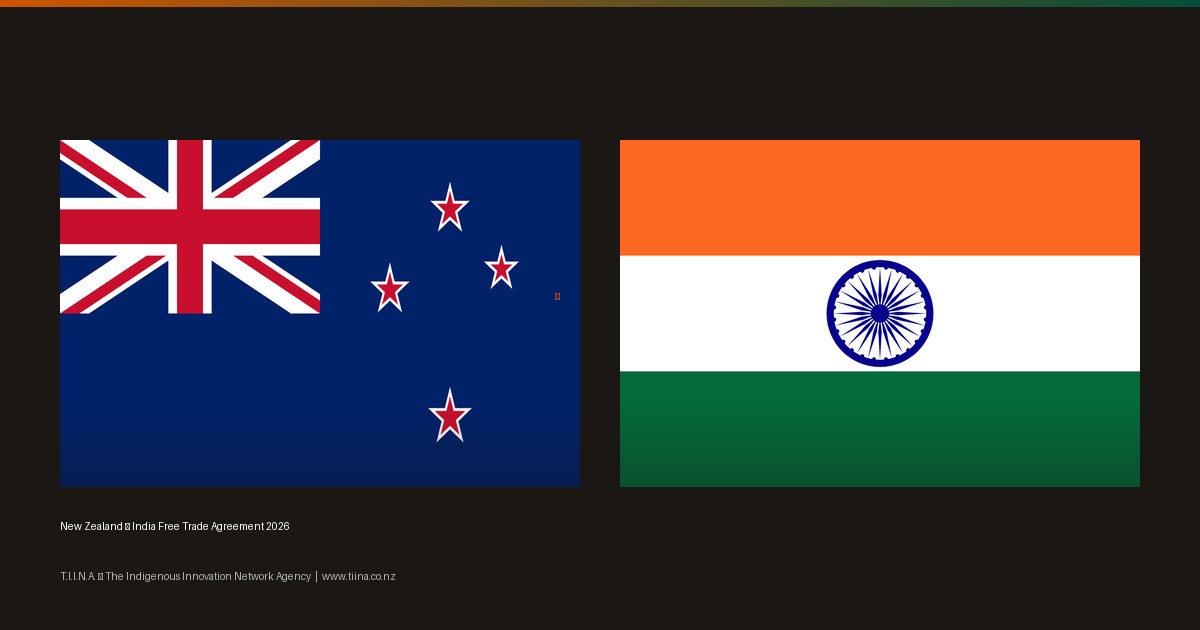
The India FTA Is Here. Indian Delegates Are on the Ground. Iwi Need to Be at the Table.
The India FTA is ratified and Indian delegates are travelling Aotearoa right now. The products India wants are the products Maori produce. The alignment is structural. The marae is the most powerful meeting room in the country. Iwi need to be at the table.

Your Vote Is Your Weapon: Strategic Voting for Māori in 2026
The 2026 General Election and PSGE elections are not just democratic exercises. They are strategic opportunities to reshape who holds power, how decisions are made, and whether Māori communities continue to be governed by people who understand what is at stake.

Indigenising Economic Development: Beyond the Western Playbook
Indigenising economic development is not about rejecting modern economics. It is about expanding the definition of prosperity and building systems where cultural authority and economic growth are interdependent.

Climate Resilience and the Value of Matauranga Maori During Extreme Weather Events
Cyclone Gabrielle showed us what matauranga Maori has always known - that community resilience is built on relationships, collective systems, and deep knowledge of the land. It is time this knowledge shapes our national approach to climate adaptation.

Navigating the Shifting Geopolitical Landscape: What It Means for NZ Business
Trade tensions, supply chain disruptions, and shifting alliances are reshaping the landscape for NZ businesses. For Maori commercial entities, the opportunity to leverage Indigenous networks has never been greater.